Bunion Correctors: Do They Actually Work?
The honest answer: they can help how your bunion feels, and they cannot change what it is. Knowing the difference saves money and frustration.
Read the article →The bump at the base of your big toe did not grow there; the bone drifted there. Bunions develop over years, usually run in families, and give you more good options the earlier you deal with them, whether that means comfortable shoes for the next decade or a well-timed correction.
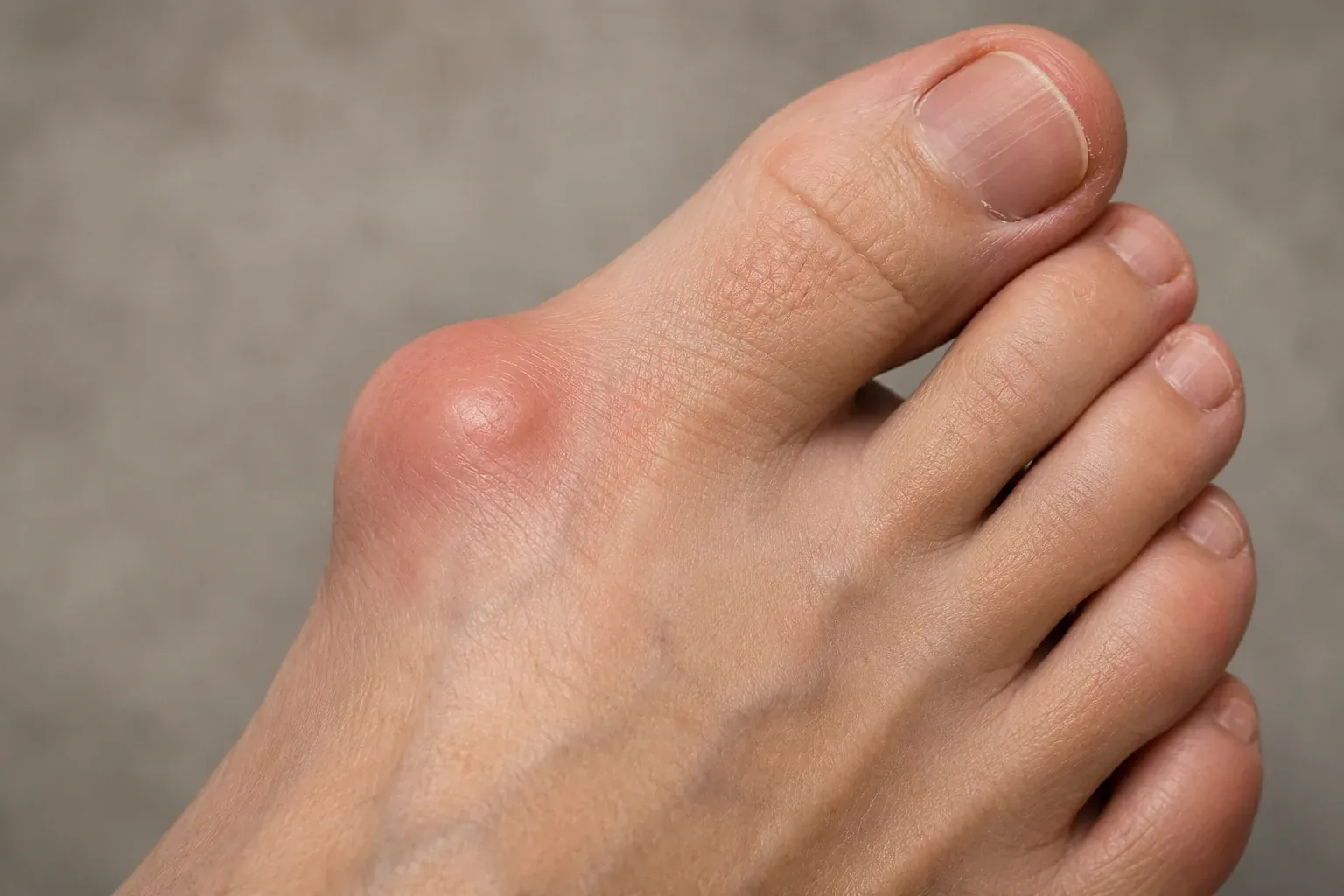
Behind the big toe sits the first metatarsal, the foot's main weight-bearing bone. In a bunion, that bone slowly leans outward while the big toe tilts the opposite way, and the joint between them becomes the prominent knuckle you can see and feel. Nothing has been added to the foot; its architecture has shifted. That distinction drives every treatment decision, because pads and wider shoes can make a shifted joint comfortable, but only surgery can move the bone back.
Two questions frame the exam: how far has the joint shifted, and what exactly hurts? The bump hurts from shoe friction, the joint itself hurts from cartilage wear, and the second toe hurts from crowding, and each points to a different fix. In-office X-rays then measure the deformity angles, which stage the bunion and separate a watch-and-support situation from one heading toward correction.
See Dr. Zimmermann when the bunion starts interfering: rubbing raw in your boots, aching after a full day, crowding the second toe, or visibly bigger than last year. Early visits buy more than most people expect, since orthotics and footwear changes can slow the drift, and periodic X-rays establish the pace so surgery, if it is ever needed, gets timed well instead of done in crisis.
Call (859) 236-5140 promptly for: sudden severe pain, redness, and heat at the joint, which can be gout or infection rather than the bunion itself. Urgent foot problems are worked into the schedule faster.
Treatment starts with the simplest option likely to work and escalates only when needed.
The fastest relief a bunion patient gets is a shoe or boot with a wide, rounded toe box that stops pressing on the bump. Gel pads and toe spacers quiet the irritated skin and keep the second toe out of harm's way.
Most bunion feet roll inward, driving load through the big-toe joint on every step. A molded insert straightens that load path, easing today's pain and taking fuel away from the progression.
When the bump suddenly turns red, hot, and swollen, the fluid sac over the joint is usually inflamed. A short course of targeted treatment calms it, and the flare pattern is worth noting since gout can mimic it.
When the joint hurts despite proper shoes and support, surgery realigns the metatarsal itself rather than shaving the bump. The conversation beforehand is plain: which procedure fits your bunion's stage, how many weeks before you are back in work boots, and what waiting would actually cost you.
Mostly no. The tendency comes from inherited foot mechanics, which is why bunions cluster in families and appear even in people who have worn sensible shoes their whole lives. Narrow, tapered footwear speeds up a bunion that was already coming, so shoes matter, but they are rarely the root cause.
The bone's position cannot be changed without surgery; no splint, corrector, or exercise moves a shifted metatarsal. What conservative care reliably does is relieve pain and slow the drift, and for many people that is all their bunion ever needs.
It depends on the procedure, which depends on the bunion's severity. In broad terms, expect a stretch in a protective boot or surgical shoe, a gradual return to full weight bearing, and several weeks before regular footwear. You get a specific week-by-week timeline for your procedure before you decide anything.
A painless bunion that is not changing can simply be watched. One baseline visit with X-rays is still worthwhile, because knowing the joint's angles now makes real progression easy to spot later, and early support is the cheapest way to slow a bunion down.
The honest answer: they can help how your bunion feels, and they cannot change what it is. Knowing the difference saves money and frustration.
Read the article →Four real options, very different success rates. An honest comparison before you spend another year on the wrong one.
Read the article →Every ingrown toenail is angry; not every one is infected. Here's the line, and what crossing it means.
Read the article →One visit at our Danville office gets you a diagnosis and a plan. Call (859) 236-5140 or book online.