Ingrown Toenail Infection: The Warning Signs
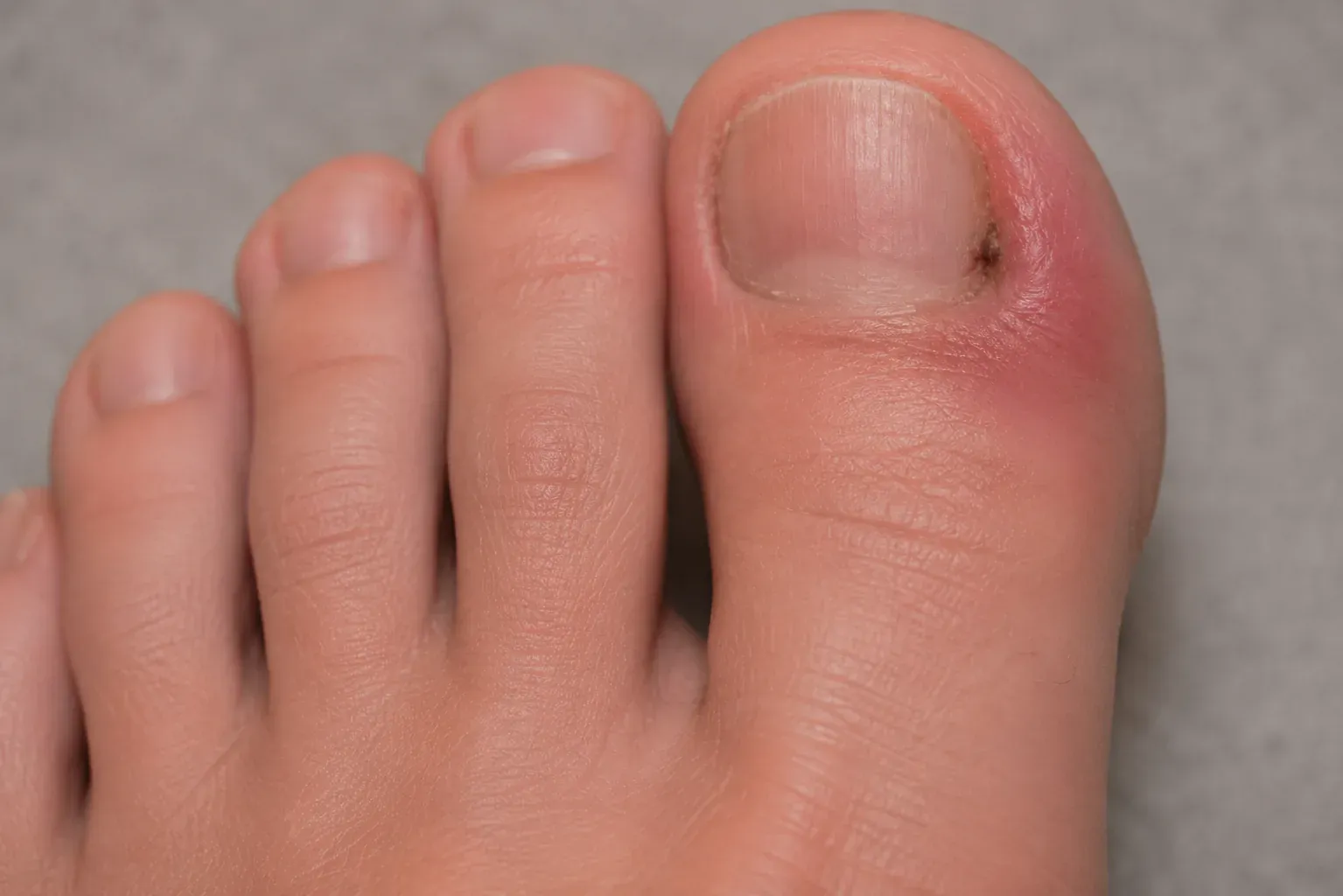
Every ingrown toenail is angry; not every one is infected. Here's the line, and what crossing it means.
Read the article →An ingrown toenail turns every step, every boot, and every bedsheet into a problem. People routinely live with one for months; the visit that fixes it usually takes about half an hour, and a toe that keeps doing it can be corrected so it stops for good.
The corner of a toenail is supposed to glide over the skin fold beside it. When it dives into that fold instead, the body treats its own nail like a foreign object, and the toe becomes red, swollen, and tender out of all proportion to its size. Left alone, bacteria join in and the fold starts to drain. Whether this happens once or over and over comes down mostly to the nail's built-in shape: a flat nail trimmed too short may ingrow a single time, while a deeply curved nail will keep ingrowing no matter how carefully it is cut.
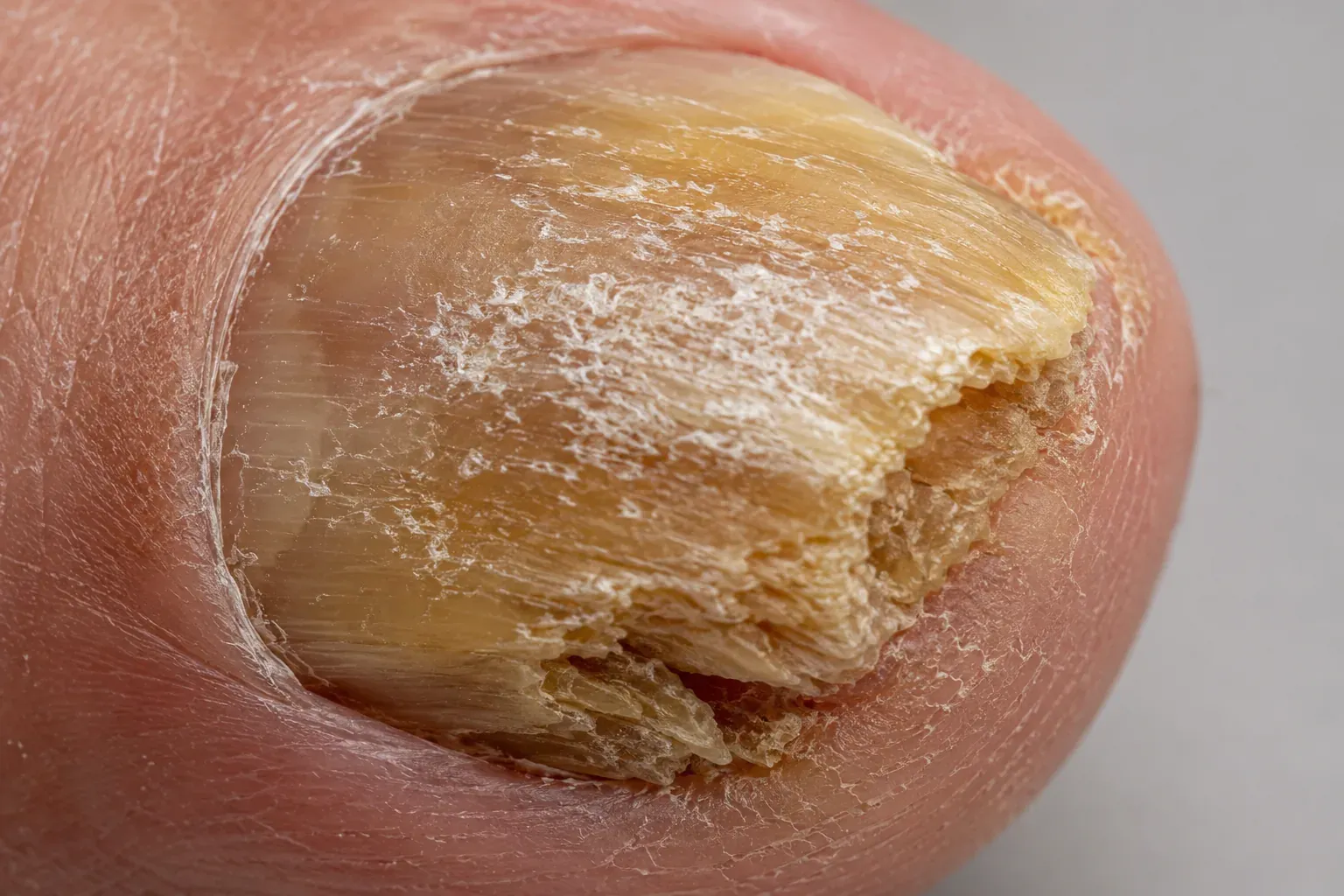
No imaging needed; the exam answers three questions in under a minute. Is the fold infected? Is this a one-time trimming problem or a recurring nail-shape problem? And is something else feeding it, like a fungal nail or boots that crowd the toes? The answers decide between simple edge removal and a permanent correction.
Come in if a few days of warm soaks and roomy shoes have not turned it around, if the toe is draining, or if the same corner flares every few months. Do not dig the corner out yourself; a leftover spike of nail grows deeper and restarts the cycle. And if you have diabetes, call the office the day you notice it, because an inflamed toe on a foot with reduced sensation or circulation is not a wait-and-see problem.
Call (859) 236-5140 promptly for: spreading redness or red streaking up the toe or foot; pus with fever; any ingrown nail if you have diabetes or poor circulation. Urgent foot problems are worked into the schedule faster.
Treatment starts with the simplest option likely to work and escalates only when needed.
Two small injections numb the toe completely, the ingrown edge is lifted and removed, and the pressure is gone before the numbness wears off. Most patients drive themselves home and are back in regular shoes the next day.
An infected fold is drained and dressed properly, with antibiotics added when the infection has spread beyond the fold itself.
For toes that ingrow repeatedly, a chemical is applied to the few millimeters of nail root under the problem edge so that strip never grows back. The visible change is a slightly straighter nail edge; the practical change is the end of the cycle.
Trim straight across and leave the corners visible, choose boots with room in the toe box, and manage sweat with sock changes. Cheap habits that prevent expensive toes.
Numbing takes a few minutes to work, and removing the nail edge takes about five more. Plan on roughly half an hour in the office start to finish, including aftercare instructions.
Usually the next day, including jobs on your feet. Keep the toe clean and dressed as instructed, and if your work means steel-toe boots all day, say so at the visit so the dressing and footwear plan account for it.
Teenagers are the classic repeat customers: growing feet, tight athletic shoes, sweaty socks, and nails trimmed short and rounded. If the same toe has flared more than twice, a permanent edge correction usually beats years of on-and-off misery.
Some mild episodes settle on their own. The rest progress: the fold swells over the nail, drainage starts, and walking gets guarded. In patients with diabetes or poor circulation an ignored ingrown nail can become a serious infection, which is why those feet get same-day attention.
Every ingrown toenail is angry; not every one is infected. Here's the line, and what crossing it means.
Read the article →Most ingrown toenails start with a trimming decision. The correct technique takes no extra time; it just takes knowing it.
Read the article →Four real options, very different success rates. An honest comparison before you spend another year on the wrong one.
Read the article →One visit at our Danville office gets you a diagnosis and a plan. Call (859) 236-5140 or book online.